4 minutes to read
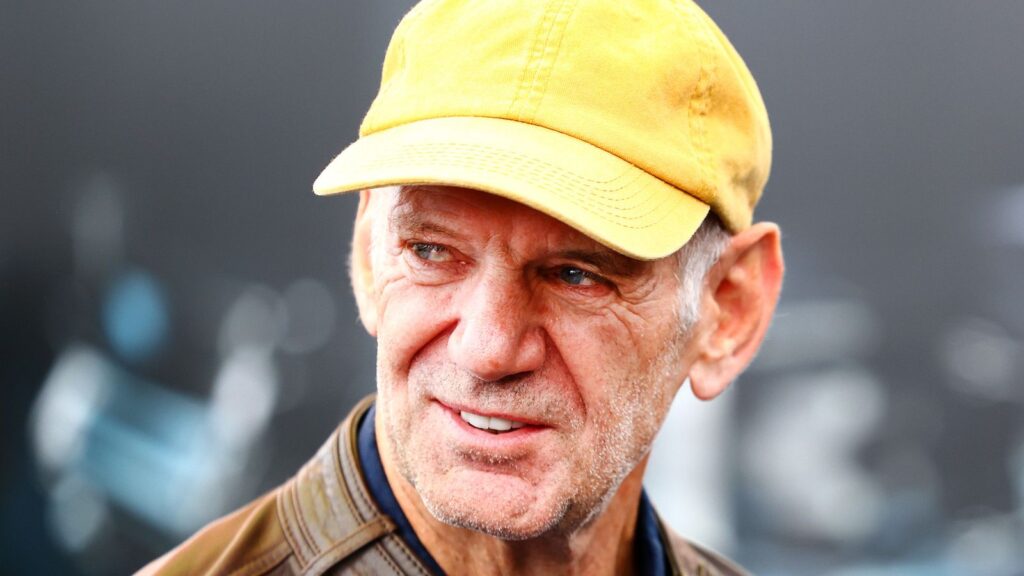
Do you know Adrian Newey? He is one of Formula 1’s greatest engineers. This aerodynamics specialist designed the racing cars that enabled famous teams such as Williams, McLaren and Red Bull to win numerous world championships over the last thirty years.
In this age of powerful computers and software, Adrian Newey stands out for working with pencil and drawing board. His ideas and inspiration have worked wonders, and at 67, teams are still fighting over him.
Why mention Newey ? Because he is a deeply sensitive man. His testimony is exemplary of what this blog will try to bring to its readers.
In an autobiography published a few years ago, the brilliant engineer recounted how ideas would come to him in a jumble in his brain, how he would try to channel them and get them down on paper as best he could. « Normally, I have ideas all the time, he wrote. On the plane, in the toilet, in the middle of the night. They come flooding in, and not necessarily at the most opportune moment ».
At the office, when Newey gets stuck on his drawing board and decides to take a break, new ideas can come to him within minutes. When he goes to the seaside with his family for a holiday and is well rested, he becomes remarkably creative. But the positive dynamic is reversed when he is exhausted or feels oppressed by a grey and uniform working environment.
-Any reproduction is prohibited without the author’s consent–
Newey is passionate and an aesthete. « I had flourished in a discipline that I had revered since childhood, a sport that I had loved, not always for what it was, but for what it had the potential to be: a total synchronisation of man and machine, the perfect combination of style, efficiency and speed ». He is also a happy man who, after thirty-five years in the business, could « take stock of a career rich in events and fertile in ideas ».
However, while reading his autobiography, one passage caught our attention. Newey recounts an experience that could have changed everything. A cinematic experience : « I was thirteen when my brother Tim, visiting home during his studies at the University of Bath, suggested a family outing to the cinema to see A Clockwork Orange. On that occasion, my parents were delighted to dress me up to look like an eighteen-year-old adult, so that I would be allowed to see the film. They dressed me up in a hat, sunglasses and my brother’s trench coat, and I was able to sneak into the cinema ».
Newey recounts his parents’ embarrassment and anger after the screening, « caught between their liberal parenting sensibilities and the film’s content ». Above all, he describes the profound impact that this film screening had on him :
« The film itself seeped into my subconscious, and forty years later, when I finally saw it for the second time, I realised that I remembered almost every shot: its refined aesthetics, hyperrealism and stylised violence, set to a soundtrack combining Beethoven and synthesizers, had made such an impression on me that I hadn’t been fully aware of it at the time ».
This passage is remarkable: it shows how images and sounds can impact the brain of a particularly sensitive person, especially when they are young.
In the early 1970s, going to the cinema was less common than it is today, and television had not yet invaded homes. The internet did not exist. The young Adrian Newey was particularly attracted to manual work and design, especially through his father’s workshop, to whom he pays tribute in his book.
But let’s imagine for a second this brilliant and emotional being in today’s world. He, so marked by a single film, what would he have become if he had been surrounded by the current mass of feature films? How would he have evolved in contact with daily television series, the avalanche of micro-videos on digital networks, or pornography so easily accessible via the internet?
Would his powerful creativity have been able to unfold with the same ease? Would his sensitivity have been distorted?
In this blog, we will try to answer some of these questions, and many more. We will be open to interaction with readers and their experiences. We will do so while keeping in mind the warning of the Pythia of Delphi in ancient Greece, which has perhaps been somewhat neglected in Europe in recent decades: ‘Know thyself.’
Would you like to share your experiences and observations ? To receive our future publications ? Please feel free to write to us using this form.